Welcome to the Kataria Tech Zone blog. If there’s one process that quietly decides whether a piece of furniture looks factory-finished or handmade-and-rushed, it’s edge banding. A clean, seamless edge on a plywood or MDF panel is what separates a premium modular kitchen from a budget one — and how you apply that edge band, manually or automatically, has a direct impact on your speed, labor cost, and consistency.
The trouble is, most workshops don’t plan this upgrade in advance. They start with a manual edge bander because it’s affordable and flexible, keep growing order volume on the same machine, and only realize they’ve outgrown it when deadlines start slipping. This guide breaks down exactly how manual and automatic edge banding differ, and gives you a practical framework for deciding when — not if — your workshop should upgrade.
What Is Manual Edge Banding?
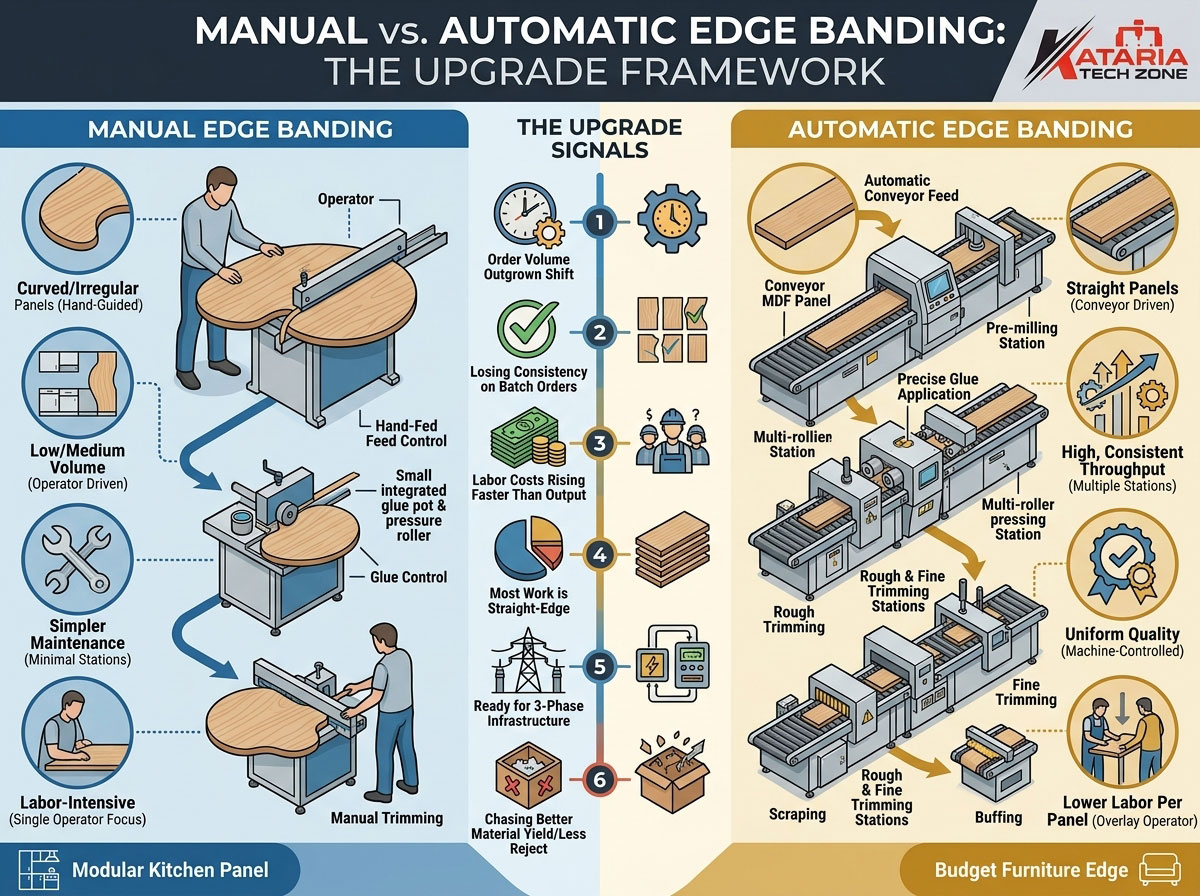
A manual edge bander applies edge band tape (PVC, ABS, or wood veneer) to a panel edge using a single integrated unit that combines a glue pot, a pressure roller, and a hand-operated trimming mechanism. The operator feeds the panel through by hand, controls the feed speed, and manually trims the excess tape once it’s bonded.
How the process typically works:
- The operator loads the panel and switches on the glue pot to heat the hot-melt adhesive.
- The panel edge is fed through the machine by hand at a controlled speed.
- The glue roller applies adhesive to the edge as it passes.
- A pressure roller bonds the tape to the panel.
- The operator manually trims the overhanging tape using a pneumatic or hand-guided cutter.
Manual machines are compact, affordable, and — critically — versatile. Because the operator controls the feed by hand, a good manual edge bander (like Kataria Tech Zone’s, which supports dual-edge capability for both straight and curved panels) can band contoured or circular edges that automatic lines often can’t handle at all.
Where Manual Edge Banding Excels
- Curved and irregular panels. Circular table edges, curved cabinet doors, and custom-shaped furniture pieces are difficult or impossible to run through most automatic lines. A manual bander’s hand-guided feed handles these without a special jig.
- Low to medium volume. For workshops banding a few dozen panels a day, the throughput of a manual machine is rarely the bottleneck — the design, cutting, and assembly stages usually take longer.
- Lower upfront investment. Manual machines cost a fraction of a fully automatic line, which matters for a workshop still building its customer base.
- Simpler maintenance. Fewer motorized stations means fewer things that can go out of calibration, and troubleshooting is generally more straightforward.
- Flexibility across materials. Switching between PVC, ABS, or veneer tape, or between different band thicknesses, is usually just a quick adjustment rather than a full changeover.
Where Manual Edge Banding Falls Short
- Labor-intensive. Every panel needs an operator’s full attention from start to finish — there’s no “load and walk away.”
- Inconsistent finish at scale. Feed speed varies slightly from operator to operator and even panel to panel, which can show up as small variations in glue line quality over a long run.
- Throughput ceiling. There’s a hard limit to how many panels one operator can push through a manual machine in a shift, no matter how skilled they are.
- Operator fatigue and turnover risk. Repetitive manual feeding for hours is physically tiring, and losing a trained operator can directly slow production.
What Is Automatic Edge Banding?
An automatic edge banding machine — sometimes called a fully automatic edge bander — replaces the operator’s hand-feeding with a motorized conveyor or chain-feed system, and combines multiple processing stations into one continuous line.
A typical automatic edge banding sequence:
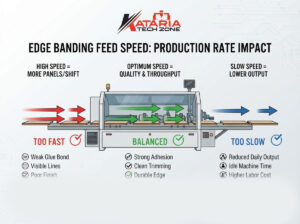
- Panel feeding — a conveyor or chain-feed system pulls the panel through at a fixed, programmable speed, with pressure rollers keeping it stable.
- Pre-milling (optional but recommended) — diamond or carbide cutters mill a thin layer off the raw edge just before glue application, so the surface is clean, straight, and splinter-free before the tape is even applied.
- Glue application — the glue pot heats hot-melt adhesive to a precise, consistent temperature and a glue roller applies an even layer.
- Pressing — the edge band tape is pressed onto the panel under consistent pressure.
- Rough and fine trimming — dual-stage trimming units cut the overhanging tape flush with the panel, first roughly and then with a fine finishing pass.
- Scraping and buffing — excess glue is scraped away and the finished edge is buffed for a seamless look.
Kataria Tech Zone’s Rough & Fine Trimming Edge Banding Machine is built exactly around this dual-stage logic — the rough trimming unit removes the bulk of the overhang, and the fine trimming unit finishes the edge to a precise, consistent standard, station after station, without operator intervention at each step.
Where Automatic Edge Banding Excels
- High, consistent throughput. Once a panel enters the line, it moves through every station — feed, glue, press, trim, buff — without needing manual handling at each stage. That’s a fundamentally different production rate than a manual machine.
- Uniform finish quality. Because glue temperature, feed speed, and pressure are machine-controlled rather than hand-controlled, panel-to-panel consistency is far tighter. That matters enormously for large batch orders where every panel needs to match.
- Lower labor dependency per panel. One operator can often oversee an entire automatic line rather than dedicating full attention to a single panel at a time.
- Better material yield. Pre-milling and dual-stage trimming reduce chipping and rework, which means less wasted board and edge band tape over time.
- Scales with growth. As order volume increases, an automatic line absorbs that growth far more gracefully than adding more manual machines and operators.
Where Automatic Edge Banding Falls Short
- Higher upfront cost. A fully automatic line is a significant capital investment compared to a manual machine.
- Struggles with curved or irregular panels. Straight-line conveyor feeding is what makes automatic banders fast — but it also means most standard automatic lines can’t handle contoured or circular edges the way a manual machine can.
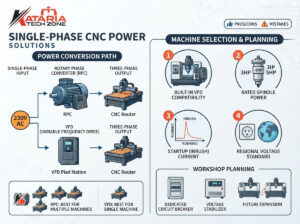
- Requires stable power supply. Multi-station automatic lines typically need a three-phase power connection to run reliably, which is worth checking against your workshop’s electrical setup before you commit — our guide on single-phase vs. three-phase edge banding machines breaks this down in detail.
- More setup variables to manage. With more stations comes more that can drift out of calibration — glue temperature, roller pressure, and trimmer alignment all need to be dialed in correctly, which we’ve covered step by step in our automatic edge banding machine setup and troubleshooting guide.
Manual vs. Automatic Edge Banding: Side-by-Side Comparison
| Factor | Manual Edge Bander | Automatic Edge Bander |
|---|---|---|
| Upfront cost | Lower | Higher |
| Throughput | Limited by operator speed | High, continuous |
| Finish consistency | Varies with operator skill | Uniform, machine-controlled |
| Curved/irregular panels | Handles well | Generally not supported |
| Labor requirement | One operator per machine, full attention | One operator can oversee full line |
| Power supply needed | Often single-phase | Typically three-phase |
| Ideal daily volume | A few dozen panels | Hundreds of panels |
| Maintenance complexity | Lower | Higher (more stations) |
When Should a Workshop Upgrade to Automatic Edge Banding?
There’s no universal panel-per-day number that triggers an upgrade — it depends on your labor cost, order mix, and growth trajectory. But a few clear signals tend to show up consistently in workshops that are ready to move from manual to automatic.
1. Your Order Volume Has Outgrown Your Operator’s Shift
If you’re regularly asking your edge banding operator to work overtime just to keep up with panel volume — or if edge banding has become the visible bottleneck holding up cabinet assembly and dispatch — that’s the clearest sign the manual machine has hit its ceiling.
2. You’re Losing Consistency on Large Batch Orders
Modular kitchen and office furniture contracts often require dozens or hundreds of identical panels. If quality checks are catching small variations in glue lines or trim finish between panels from the same batch, an automatic line’s machine-controlled consistency solves that directly.
3. Labor Costs Are Rising Faster Than Output
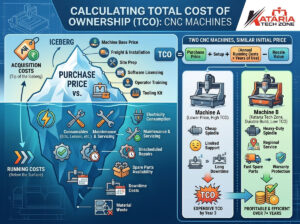
As wages increase and skilled operators become harder to retain, the cost-per-panel on a manual line tends to climb. Automatic lines shift that cost curve — the capital investment is higher, but the labor cost per panel drops significantly at volume, which is where the ROI math starts to favor automation.
4. Most of Your Work Is Straight-Edge Panels
If curved and irregular panels make up only a small fraction of your work — most modular kitchen, office furniture, and cabinetry jobs are straight-edge — the flexibility advantage of a manual machine matters less, and the throughput advantage of automatic banding matters more.
5. You’re Ready for the Power Infrastructure
Since automatic edge banding machines generally need a three-phase supply, workshops considering the switch should confirm their facility can support it (or budget for the upgrade) before purchasing. This is a common point of confusion, which is exactly why we wrote a dedicated breakdown of single-phase vs. three-phase power requirements for edge banding machines.
6. You’re Chasing Better Material Yield
Rejected panels and rework due to chipping or poor trimming eat directly into margin. If pre-milling and dual-stage trimming would meaningfully cut your scrap rate, that’s a quantifiable case for the upgrade — not just a “nice to have.”
A Hybrid Approach: You Don’t Always Have to Choose Just One
Many growing workshops don’t retire their manual edge bander the moment they invest in an automatic line — they run both. The automatic line handles high-volume, straight-edge production work, while the manual machine stays in service for curved panels, small custom jobs, and quick one-off repairs where setting up the automatic line wouldn’t be efficient. If your business regularly mixes standard cabinetry with custom curved furniture, keeping both machines available can be the most practical long-term setup.
Edge banding also rarely stands alone in a production line — panels are usually cut and sized before they’re banded. If you’re evaluating your panel-cutting setup at the same time, it’s worth reading our comparison of vertical vs. horizontal panel saws to make sure your cutting stage can keep pace with a faster edge banding line.
Conclusion: Match the Machine to Your Production Reality
Manual edge banding isn’t an inferior technology — it’s the right tool for low-to-medium volume workshops and for any business doing meaningful work on curved or custom panels. Automatic edge banding isn’t automatically “better” either — it’s the right tool once volume, consistency requirements, and labor economics tip in its favor.
The upgrade decision comes down to a few honest questions: How many panels are you banding a day, and is that number growing? How much does inconsistency or rework currently cost you? And can your facility support the power requirements of a full automatic line?
At Kataria Tech Zone, we manufacture both manual edge banders and fully automatic edge banding machines, so we’re not trying to steer every workshop toward the more expensive option — we’re here to help you match the machine to your actual production volume. Browse our full edge banding machine range, or get in touch and we’ll help you work out which setup makes sense for where your workshop is today — and where it’s headed next.
Related reading: Single-Phase vs. Three-Phase Edge Banding Machines for Small Woodworking Shops | Automatic Edge Banding Machine Setup: Eliminating Glue Line Gaps and Rough Cuts | Maximizing Workshop ROI: Vertical vs. Horizontal Panel Saw